
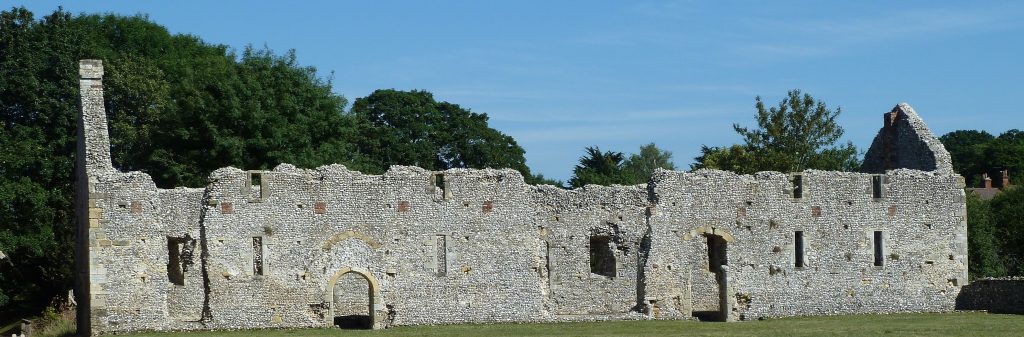
Bishops Waltham Palace was the sumptuous residence for the powerful Bishops of Winchester. The palace has 900 years of history. It has been host to fascinating events and numerous royal guests.
The remains you’ll see date back to the 12th and 14th century. The buildings give you a great feel for just how grand the residence was. There is plenty to explore, including a free entry museum called The Farmhouse.
King Stephens’s brother, Henry of Blois, started the construction in the 12th century, during the time of the devastating civil war with Queen Matilda. The palace has hosted numerous royals including Henry II, Richard I, Henry V, Henry VIII and Elizabeth I.
Now though the palace ruins are nearly always a quiet oasis, hidden away in this beautiful Hampshire town. There are picnic tables and benches around the site and it’s a great place for a romantic picnic.
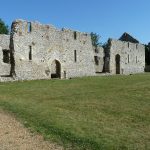
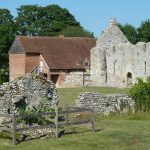
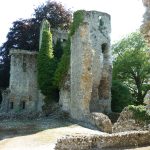
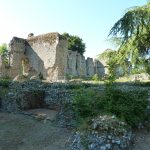
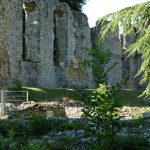
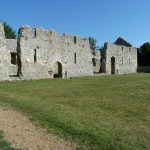
See below for more history of the palace.
Location – Bishops Waltham, Hampshire, SO32 1DH
Opening Times – Between April and September the grounds are open from 10am-6pm daily. During the summer the Farmhouse Museum is open at the weekend from 12-4pm. From October to March the grounds are open at the weekend from 10am-4pm. Please see here for more details.
Parking – There is a free car park on site.
Facilities – There are no facilities on site, but there are toilets at the village car park.
Access – There are steps and uneven surfaces throughout the ruins, but wheelchair access is possible for some of the site.
Dogs – Dogs on leads are welcome.
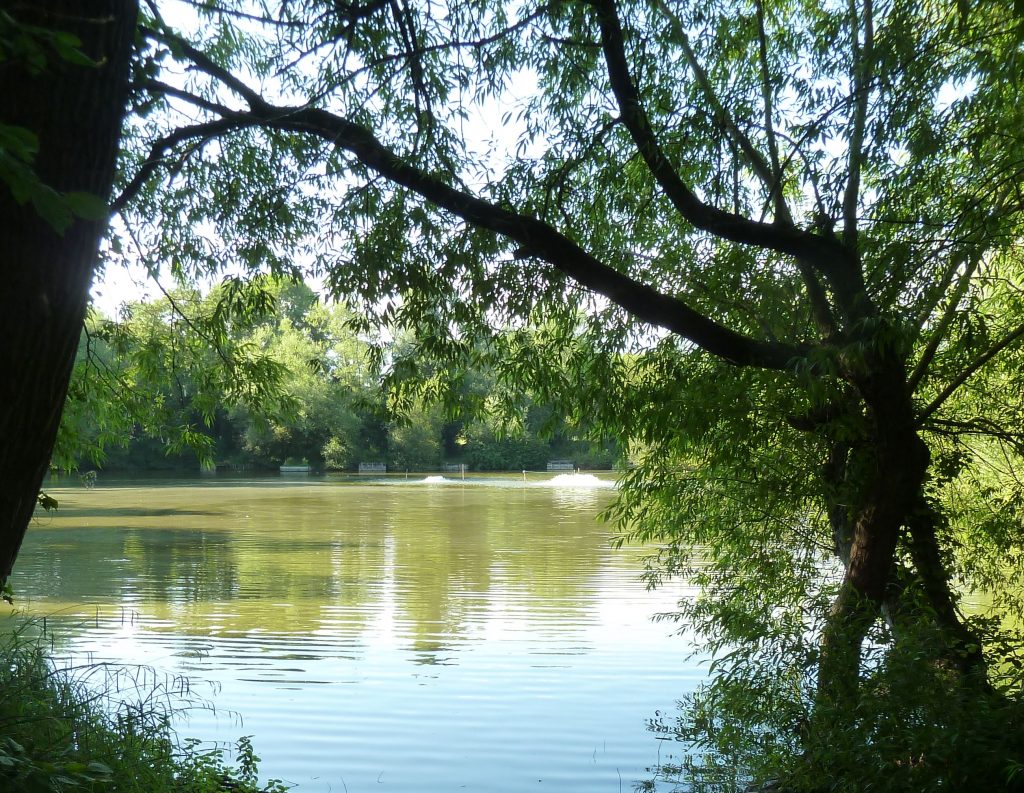
Safety – There is a well that has a metal grate across the top and a deep lake.
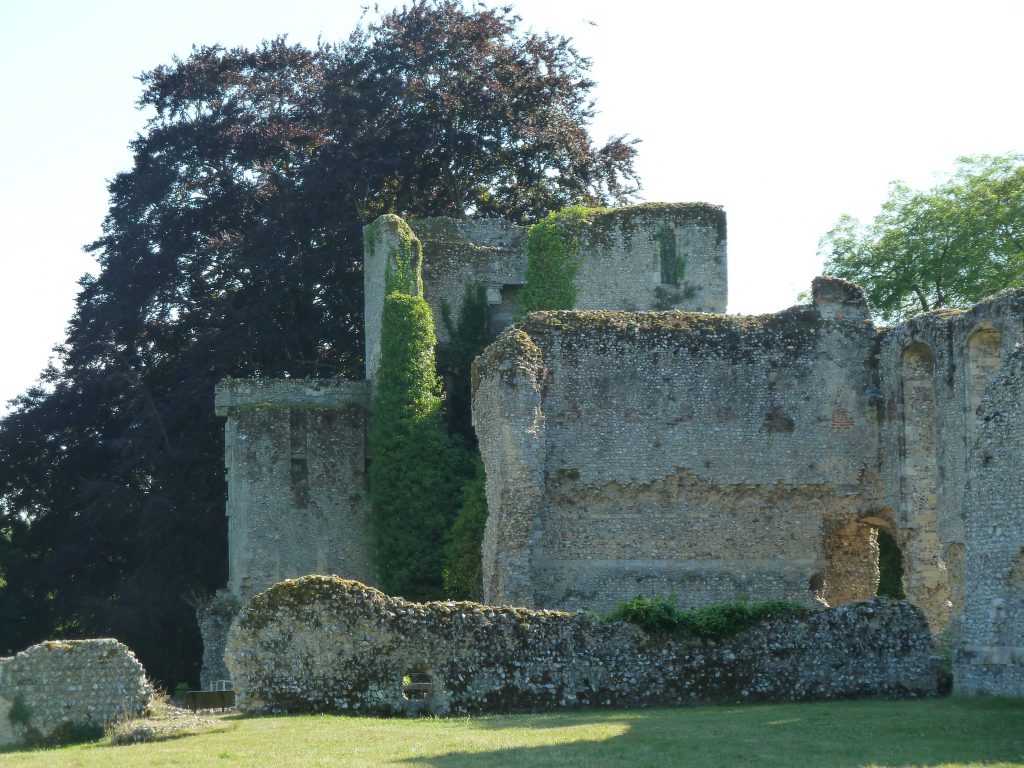
History of Bishops Waltham Palace – During the middle ages the Bishops of Winchester were amongst the richest in Europe. Henry of Blois, King Stephen’s brother, was the Bishop of Winchester and built the first residence in Bishops Waltham in the 12th century.
This was constructed during the devastating civil war between King Stephen and Matilda. Henry helped his brother Stephen gain the English crown, however in face of probable defeat Henry defected and supported Matilda. Henry then changed sides again and supported his brother until Stephen’s death in 1154. When Matlida’s son Henry II came to power Henry of Blois escaped England and went into exile for four years.
During Henry of Blois’ exile Henry II ordered the destruction of Bishop Henry’s properties, this included the castle at Bishops Waltham. However on Bishop Henry’s return he rebuilt much of the castle at Bishops Waltham. Many of the outer walls still show the 12th century masonry.
The castle at Bishops Waltham was rebuilt to such a sumptuous standard that in 1182 and 1192 it hosted royal council meetings with Henry II and Richard I.
William of Wyckham (Wickham) was just 42 years old when Edward III made him the Bishop of Winchester, after already reaching the significant height of Lord High Chancellor of England.
William had advised the king on the re-modelling of Windsor Castle and happily took on the rebuilding of the 12 residences belonging to the Diocese of Winchester, one of which was the castle at Bishops Waltham. William oversaw the transformation of the castle into the palace which included redesigning the great hall, service area, kitchen and great chamber. William died in Bishops Waltham in 1404.
Cardinal Henry Beaufort was the illegitimate son of John of Gaunt, Duke of Lancaster, (third surviving son of King Edward III) and his mistress Katherine Swynford. They later married and the pope legitimised their children including Henry Beaufort, however Henry IV (their half-brother) barred Henry and any of the other 3 children to inherit the crown. When John Of Gaunt’s eldest son from his marriage to Blanche of Lancaster became Henry IV he made Henry Beaufort Bishop of Winchester, this again included the residence at Bishops Waltham.
Henry Beaufort made numerous changes to the palace including increasing the height of the west tower, a new chapel, a new inner gatehouse and a range of living accommodations. Cardinal Henry Beaufort was Bishop of Winchester from 1404 to 1447.
In the 16th century Henry VIII was a frequent visitor to Bishops Waltham Palace. In 1522 Henry VIII and the Holy Roman Emperor Charles V signed a treaty at Bishops Waltham pledging an alliance against their mutual rival Francis I, King of France.
During Edwards VI reign Bishops Waltham Palace was removed from the bishopric of Winchester and moved to the Lord Treasurer.
In 1554 Queen Mary I came to Bishops Waltham Palace to meet her future husband, who became King Phillip of Spain. They were married at Winchester Cathedral. During Mary’s reign she restored the palace to the Bishop of Winchester and it remained this way until the Civil War.
During the English Civil War of 1642-1649 the palace was held for the king by the royalists, however in 1644 the Parliamentarians’ burnt the palace down, Bishop Walter Curll is reported to have escaped in a cart of manure.
In 1660, on the Restoration of King Charles II, the palace was returned to the bishops. However as the palace was in ruins it was abandoned.
Over the subsequent years the palace was often used as a source of building materials for the village.
During the 19th century the palace was used as a farm, and then in the 20th century guardianship was passed to the Ministry of Works’ by Admiral Cunningham; who was one of Britain’s most distinguished naval commanders during the Second World War.